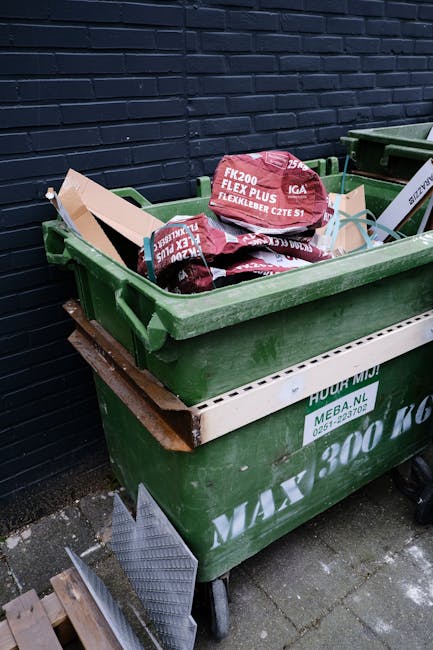
Acton business rubbish collection solutions for shops and offices
If you run a shop, office, clinic, or small workspace in Acton, rubbish has a way of turning up faster than you planned. Cardboard builds up behind the till. Broken chairs get pushed into a corner. Office clear-outs happen suddenly. Stock rooms start to feel cramped. And before long, the whole place looks a bit tired.
That is where Acton business rubbish collection solutions for shops and offices really earn their keep. The right service helps you clear commercial waste quickly, keep the premises presentable, reduce disruption, and stay on top of sensible disposal practices. This guide breaks down how it works, what to expect, what to avoid, and how to choose a solution that actually fits a busy working day.
Truth be told, most businesses do not need a complicated waste setup. They need something dependable, straightforward, and flexible enough to deal with the messy bits of real life. Let's get into that.
Why Acton business rubbish collection solutions for shops and offices Matters
Commercial waste is not just a back-of-house nuisance. In a shop, it can affect customer experience within minutes. In an office, it can slow down staff, make storage areas awkward, and create that low-level clutter that everybody notices but nobody quite claims. You know the feeling: boxes leaning against a fire exit, a dead printer in the corner, or a pile of packaging that somehow became a permanent fixture.
Good rubbish collection is about more than "getting rid of stuff". It supports the day-to-day running of the business. For shops, that might mean clearing delivery packaging, damaged display units, old shelving, or end-of-line stock. For offices, it could mean removing paper waste, filing cabinets, obsolete IT equipment, desks, chairs, or items left behind after a move or refurbishment. When done properly, it keeps the workplace calm and workable. Sounds simple. It is, really.
There is also a trust element. Customers notice whether a shop feels clean and organised. Staff notice whether their workspace is clutter-free. And if you are in a customer-facing business, the state of your waste handling quietly says a lot about your standards. That is especially true in Acton, where many businesses operate from compact premises and do not have room to waste space on waste.
For businesses that also deal with stock turnover, fit-outs, or clear-outs, it can make sense to use a broader service such as business waste removal or, where interior spaces need a more complete reset, office clearance. If the waste includes bulky or mixed items, a general waste removal service can be the practical middle ground.
How Acton business rubbish collection solutions for shops and offices Works
The basic process is usually straightforward, but the details matter. A good commercial rubbish collection service should adapt to your site, not the other way around. That is the whole point. A shop floor needs a different rhythm from a back-office clean-out, and a shared office building can have access issues that make timing just as important as lifting.
Typically, the process starts with an enquiry and a description of the waste. The more accurate you are, the smoother it goes. Is it mostly cardboard? A few bags of general rubbish? Old office furniture? Mixed commercial waste? A clear description helps the team plan the right vehicle, the right number of crew members, and the right loading approach.
After that, the collection is usually scheduled for a time that suits your trading hours or office routine. Early mornings, quieter mid-afternoon windows, or end-of-day slots are common choices. For busy shops, this can be the difference between a tidy handover and a slightly chaotic one.
On the day, the team should assess what is being removed, handle access carefully, and separate items where possible. Reusable or recyclable materials may be sorted away from general rubbish. This is one of those areas where experience shows: a well-run collection is less about speed alone and more about sensible sorting, safe lifting, and leaving the place clean enough that you can carry on with work without thinking about it again.
For office environments in particular, it can help to pair rubbish collection with a more focused clear-out. If you are dealing with desks, cabinets, chairs, or mixed equipment, a dedicated office clearance solution may be more efficient than trying to manage everything piecemeal. Likewise, if the job includes worn-out furniture, furniture disposal can be the cleaner route than leaving items to sit around for another month.
Key Benefits and Practical Advantages
There are several clear reasons businesses in Acton look for a reliable rubbish collection solution rather than trying to "deal with it later". Later usually means clutter. Clutter becomes friction. And friction slows everything down.
1. Faster day-to-day operations
When waste is removed promptly, stock rooms stay usable, staff can move around safely, and deliveries are easier to receive. That can sound minor, but in a tight retail unit or a busy office, every square metre matters.
2. Better presentation
Customers and clients see more than you think. A tidy back area often translates into a better front-of-house feel. Clean corridors, clear storage, and a rubbish-free entrance all help the business look organised and credible.
3. Reduced manual handling headaches
Bulky waste is awkward. Old desks, broken shelving, or stacks of packaging can be difficult to move safely. A proper collection service reduces the need for staff to lift things they probably should not be lifting in the first place.
4. More flexible than skip-only thinking
Some sites do not have the space for a skip. Others cannot spare a parking bay or want rubbish removed from inside the building rather than left outside. Collection-based rubbish removal can suit those realities much better.
5. Easier sustainability decisions
Businesses increasingly want to know that waste is being handled responsibly. Even if you are not making bold claims, it is sensible to prefer a service that sorts items for reuse, recycling, or responsible disposal where possible. That is just good practice.
6. Less disruption
A quick, well-organised removal visit can be completed with very little interruption to trading or office work. If the team is used to commercial settings, they will understand how to work around customers, staff, lifts, loading bays, and those awkward narrow corridors that always seem to appear in older buildings.
If sustainability matters to your business, it is also worth reading the company's approach to recycling and sustainability. That gives a useful sense of how materials may be prioritised, which is reassuring when you are trying to make sensible choices rather than just fast ones.
Who This Is For and When It Makes Sense
This kind of solution suits a wide range of Acton businesses. Not just large offices. Not just shops with daily deliveries. The need often shows up in smaller, less dramatic ways.
- Independent retailers dealing with cardboard, broken fittings, damaged stock, or seasonal refits.
- Offices clearing redundant furniture, paper archives, old monitors, or surplus equipment.
- Cafes and hospitality spaces that need regular back-of-house waste control or occasional bulky item removal.
- Showrooms refreshing displays, removing old fixtures, or replacing stockroom shelving.
- Start-ups and growing teams that have outgrown a cramped unit and need a one-off clear-out.
- Businesses after refurbishment where mixed waste has built up faster than expected.
It also makes sense when a workplace is at a transition point. A move. A rebrand. A refurbishment. A lease end. Or simply the point where everybody has finally admitted the cupboard near reception is, frankly, unwell.
For some businesses, a smaller targeted visit is enough. For others, it is smarter to combine rubbish collection with a fuller clear-out. A shop refit may involve bulky counters or fixtures, while an office relocation may need more comprehensive removal. In those cases, services like builders waste clearance can be useful if the job overlaps with light works, strip-out debris, or renovation waste. And if furniture is the main issue, furniture clearance can keep the process much simpler.
Step-by-Step Guidance
If you want the cleanest result with the least disruption, a little planning goes a long way. Nothing fancy. Just a sensible sequence.
- Identify the waste types
Walk the premises and separate rubbish into broad groups: general waste, cardboard, furniture, office equipment, and anything special or awkward. Do not overcomplicate it. Just be honest about what is there. - Estimate the volume
Think in practical terms: a few bags, half a van, a full room, or several bulky items. This helps avoid underbooking or overbooking. Both are annoying. - Check access
Measure narrow corridors, lift size, stair access, parking restrictions, loading points, and entry procedures. A collection team can work around a lot, but they need the basics. - Choose a suitable time window
Pick a slot that fits your trading or office rhythm. Early starts work well for shops before opening. Offices may prefer quieter midweek periods. - Protect sensitive items
Keep paperwork, IT equipment, keys, and confidential materials separate from general rubbish. It sounds obvious until the wrong box gets moved. - Clear the route
Move obstacles out of the way so the team can carry items safely. This saves time and reduces the chance of damage. - Confirm what should stay and what should go
This is especially important in mixed-use spaces. Label items if there is any doubt. It avoids a lot of back-and-forth on the day. - Review the job afterwards
Once the rubbish is gone, check the space properly. That fresh, oddly satisfying empty-corner feeling should be real, not half-done.
That process works whether you are dealing with a small stockroom clear-out or a full office tidy-up. It is simple because it needs to be simple.
Expert Tips for Better Results
After enough commercial clearances, a few patterns become obvious. Most problems are avoidable with a bit of foresight. Here are the things that tend to make the biggest difference.
Label mixed items early. If you know some items are being kept, donated internally, or sent for disposal separately, mark them before the collection day. It saves confusion and prevents accidental removal. Obvious? Yes. Still missed all the time.
Schedule around deliveries and peak footfall. In retail, an awkward collection can become a customer bottleneck. In offices, it can interrupt meetings and access to shared areas. The right timing matters more than people admit.
Deal with bulky items first. If a room contains one large broken cabinet and twenty bags of smaller waste, remove the cabinet planning first. It changes how the rest of the space flows.
Keep a short waste log. You do not need a complex system. A simple note of what was removed, when, and by which team can help when you are reviewing suppliers or planning the next collection.
Ask about sorting before disposal. Not every load is the same. If your waste includes cardboard, metal, wood, or mixed office furniture, sorting can improve efficiency and reduce the amount that ends up handled as generic rubbish.
Plan for aftercare. The best collections do not just remove waste; they leave the site ready for action. A quick sweep, a final check of corners, and a reset of the space can make a big operational difference. There is nothing glamorous about it, but it works.
One more thing: if your business has repeated clear-outs, it is worth reviewing whether the space itself is the issue. Sometimes the waste problem is really a storage problem wearing a disguise.
Common Mistakes to Avoid
Let's be honest, most commercial rubbish problems are not caused by one huge failure. They come from a handful of small mistakes piling up.
- Waiting until the space is overflowing before arranging a collection. That usually makes the job slower and more disruptive.
- Guessing the waste volume badly, which can lead to the wrong service being booked.
- Mixing confidential waste with general rubbish. That is a headache you do not want.
- Forgetting access details like loading restrictions, stairwells, lifts, or timed building entry rules.
- Leaving staff to carry heavy items without a proper plan. Not worth the risk.
- Assuming every item can be treated the same. Furniture, electronics, cardboard, and general waste can each need different handling.
- Skipping the final site check. A missed box in the back room can undo the whole tidy-up.
There is also the classic mistake of treating rubbish collection as a one-off emergency fix instead of part of a wider space-management routine. Works once. Then the clutter returns. Funny, in a depressing sort of way.
Tools, Resources and Recommendations
You do not need expensive software or specialist equipment to manage business rubbish better. But a few simple tools can make life easier.
- Basic inventory sheet for noting what needs removing.
- Room-by-room checklist for offices, stockrooms, and shop storage.
- Label stickers or marker pens to separate keep, remove, and review items.
- Phone photos of the waste area before the collection. Handy if you want a quick reference later.
- Measure tape for checking whether bulky items will fit through tight areas.
- Simple calendar reminders so clear-outs do not get forgotten during busy periods.
If you are preparing for a bigger commercial tidy-up, it can also help to read about the wider business waste removal approach, especially if you expect mixed materials rather than just one type of rubbish. For businesses with storage overflow, the same planning mindset often applies to non-office areas too.
And for teams that want more reassurance around how the work is carried out, the company's insurance and safety information and health and safety policy are worth reviewing before booking. You are not being fussy. You are being sensible.
Law, Compliance, Standards, or Best Practice
Commercial waste handling in the UK sits within a fairly serious framework, even if the job itself looks simple from the outside. Businesses are generally expected to make sure waste is stored, transferred, and disposed of responsibly. In practical terms, that means choosing a provider that understands commercial waste, keeps the process tidy, and can explain how items are handled.
It is also worth being careful with specialist waste types. If your shop or office has items such as electrical equipment, confidential paperwork, or materials linked to refurbishment, the right handling process matters. Not every item belongs in a general rubbish pile. That is where experienced judgement counts.
For many businesses, best practice is really about three things: keeping waste separate where appropriate, maintaining a clear record of removals, and using a service that is upfront about disposal methods. You do not need a lecture. You do need clarity.
Businesses should also pay attention to building rules, landlord requirements, and internal procedures. In shared office buildings, that may mean booking slots in advance or following loading bay instructions. In retail units, it may mean avoiding collection times that clash with deliveries or peak customer flow. Small details, big difference.
When in doubt, ask direct questions. What will be removed? How will it be moved? What happens to reusable or recyclable items? A decent provider should be able to explain the process plainly, without making it feel like a puzzle.
Options, Methods, or Comparison Table
There is more than one way to clear commercial rubbish. The right choice depends on the size of the job, the type of waste, and how much disruption you can tolerate.
| Method | Best for | Advantages | Limitations |
|---|---|---|---|
| Ad hoc rubbish collection | Small to medium waste loads, occasional clear-outs | Flexible, quick, suitable for mixed items | Less efficient if waste builds up frequently |
| Scheduled business waste removal | Regular commercial waste streams | Predictable, better for routine operations | May not suit one-off bulky clear-outs |
| Office clearance | Desks, chairs, cabinets, office contents | Ideal for relocations and refurbishments | More focused on internal office items than general rubbish |
| Waste removal for mixed loads | Retail, storage, and general commercial waste | Broadly practical, often the easiest all-round option | May need item-by-item clarification |
For many shops and offices, the most useful answer is not one single method forever. It is a blend. A routine for the everyday stuff, plus a flexible solution for the occasional big clear-out. That balance tends to work best in the real world.
Case Study or Real-World Example
Imagine a small Acton office with eight staff, two meeting rooms, and a storage cupboard that somehow became the place where old monitors go to retire. Add a couple of broken chairs, a stack of outdated brochures, and some surplus filing units, and the cupboard starts to feel less like storage and more like a warning sign.
The team decides to clear it before a client visit. They list the items, separate confidential paperwork, move personal belongings out of the way, and identify a clear access route from the office door to the loading point. Nothing dramatic. Just organised.
On collection day, the rubbish is taken out in one controlled visit instead of half a dozen awkward trips to the street. The cupboard is left usable again, the office feels lighter, and the staff stop sidestepping a stack of junk every time they need a printer cartridge. Small win? Absolutely. But in a compact business space, small wins are what keep the place working.
That same approach applies to a retail unit after a seasonal reset. If old display material, cardboard, and tired furniture are all removed together, the shop can reset faster and reopen with a better feel. Not flashy, just effective.
Practical Checklist
Use this before arranging Acton business rubbish collection solutions for shops and offices.
- Identify all waste types clearly.
- Separate keep, remove, and review items.
- Check whether any items are confidential, fragile, or unusually heavy.
- Measure access points, stairways, lifts, and loading areas.
- Choose a collection time that suits trading or office hours.
- Notify staff so nothing important gets mixed into the load.
- Move items into one agreed area if that is practical.
- Confirm whether furniture, mixed rubbish, or specialist items are involved.
- Review safety considerations for staff and visitors.
- Do a final walk-through after the collection.
Expert summary: the best commercial rubbish collection is not the fastest one on paper; it is the one that clears the space safely, fits your timetable, and leaves your business easier to run the next day.
Get a free quote today and see how much you can save.
Conclusion
Acton businesses do not need complicated waste problems. They need practical, responsive rubbish collection that works around customers, staff, stock, and the real pace of trading. The right solution keeps a shop looking sharp, helps an office stay orderly, and removes the background stress that clutter creates.
Whether you need a one-off clear-out, help with bulky furniture, or a more regular commercial waste routine, the key is to plan it properly and choose a service that understands how business premises actually function. That means less disruption, fewer surprises, and a space that feels easier to work in.
And honestly, that calmer, clearer feeling when the waste is gone? It matters more than people admit. A tidy business has a better rhythm. Simple as that.
Frequently Asked Questions
What do Acton business rubbish collection solutions for shops and offices usually include?
They usually include the collection and removal of commercial waste such as cardboard, broken furniture, mixed rubbish, office clutter, and other bulky items that businesses need cleared quickly and safely.
Is this different from regular household rubbish collection?
Yes. Commercial waste often includes different item types, larger volumes, tighter time windows, and site access issues that are more common in working premises than in homes.
Can a rubbish collection service work around shop opening hours?
Often, yes. Many businesses prefer early morning, quieter midday, or end-of-day slots so the collection causes as little disruption as possible.
What if my office has old desks, chairs, and cabinets?
That usually points toward an office-focused clear-out rather than simple bag waste collection. A service such as office clearance is often the neater option for bulky workplace items.
Can mixed waste be removed in one visit?
In many cases, yes, as long as the items are described clearly in advance. Mixed loads are common in shops and offices, especially during moves, refurbishments, or stock changes.
How should I prepare before the team arrives?
Separate what is staying from what is going, clear a route through the premises, and make sure any confidential documents or valuable items are kept apart from general waste.
Is furniture disposal possible as part of the collection?
Yes, provided the furniture is suitable for removal and the service is told in advance. If furniture is a major part of the job, furniture disposal can be a useful fit.
What should I ask before booking?
Ask what types of waste can be taken, how access will be handled, whether the team can deal with bulky items, and what happens to recyclable materials. Clear answers are a good sign.
How do I avoid disruption to customers or staff?
Choose a quieter collection slot, brief staff in advance, and make sure the route from the waste area to the exit is kept clear. A little planning goes a long way.
What if my business is also doing refurbishment work?
If the waste includes strip-out materials, packaging, or light construction debris, a more specific service such as builders waste clearance may be more appropriate.
How can I be sure the service is being run responsibly?
Look for clear information on safety, handling, and disposal practices. It is also sensible to review pages such as health and safety policy and recycling and sustainability so you understand the approach.
How do I get started?
The easiest step is to gather a quick list of the waste you want removed and then arrange a quote through the company's contact us page. A few clear details at the start usually save time later.